
"Free coffee machine" is the kind of phrase that makes a UAE office manager suspicious — and fairly so. Nobody gives away a bean-to-cup machine out of goodwill. But the model is real, it's standard practice across Dubai and Abu Dhabi, and once you see where the provider actually makes money, it stops looking like a catch and starts looking like a straightforward trade.
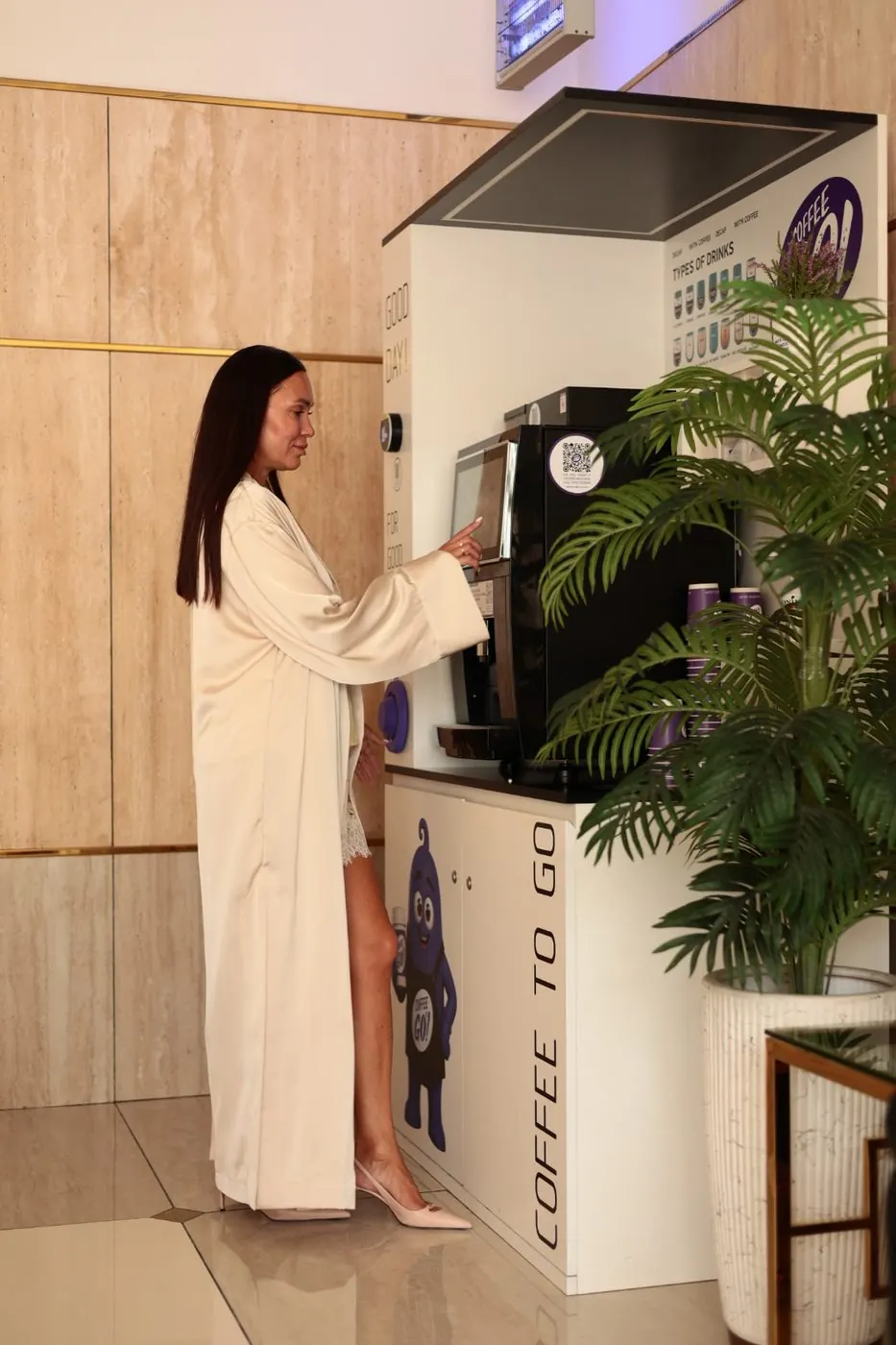
Where the "free" part comes from
The provider owns the machine. They install it, service it, repair it and eventually replace it — and they keep it on their books, not yours. In return, you buy your beans, milk powder, syrups and cups from them on a monthly basis. Their margin lives in the consumables, not the hardware.
That's the whole mechanism. It's the same logic as a printer that costs less than its ink cartridges, except here the consumable is coffee your team actually wants. The provider takes on the capital risk because a machine that gets used 60–120 times a day pays for itself in ingredient volume within a year or two.
Who pays for what
| Item | Who pays |
|---|---|
| Coffee machine (Jetinno, Necta or Rocket Espresso) | Provider |
| Delivery and installation | Provider |
| Routine servicing and cleaning visits | Provider |
| Repairs and machine replacement | Provider |
| Beans, milk, syrups, cups, stirrers | Office — from AED 1,000 / month |
| Cost per cup for your staff | Nothing — drinks are free at the machine |
The last line is the one that matters day to day. On the office model there's no payment terminal on the machine. Someone walks up, presses a button, gets a flat white. No cards, no coins, no petty-cash box, no one keeping a tally.
The office model in three steps — hardware and service on the provider, consumables on you.
Does your office qualify?
Free placement only works if the machine gets used. Providers look at volume, not company prestige. The practical threshold in the UAE is roughly 15–20 people on site most days, or a smaller team with heavy coffee habits and client meetings.
A few things that help your case:
- Staff physically in the office. A 40-person company where 30 work remotely behaves like a 10-person office.
- A sensible spot. Pantry, break area or near reception — somewhere people pass, not a storage room.
- A standard socket. Machines that run on bottled water need no plumbing and no drainage, which removes the usual landlord conversation entirely.
- 1–2 m² of floor space. That's it.
If you're below the threshold, you're not out of options — a smaller machine on a rental basis, or a shared unit in a building lobby, often works better. We cover both on the options page.
What it costs in practice
Ingredient spend scales with cups, not with headcount on paper. A 25-person Dubai office at two cups per person per day runs about 1,100 cups a month and typically lands in the AED 1,000–2,500 range — machine, delivery, servicing and repairs included.
Compare that with the alternatives. Buying a comparable bean-to-cup machine outright is AED 4,000–25,000 upfront before a single bean, plus your own maintenance contract. And a team that walks downstairs to a café instead is spending AED 18–25 a cup of their own money, plus fifteen minutes each time.
Per cup, the free-placement model lands around AED 9 in ingredient and service terms. For a fuller breakdown of the numbers, see our guide on what office coffee costs in Dubai.
Where the catches usually hide
The model is sound, but offers vary. Before signing, get clear answers on five things:
- Minimum term. Some contracts lock you in for 24 or 36 months. Ask what happens if you move office or downsize.
- Minimum monthly spend. A low headline price can come with a volume commitment you won't hit in summer, when half of Dubai is away.
- Response time on breakdowns. "We'll send someone" is not an SLA. Ask for a number of working days — and whether a loaner machine covers the gap.
- Ingredient pricing. Confirm the price per kilo and whether it's fixed for the term. This is where an over-generous "free" offer gets recovered.
- Bean origin and roast date. Coffee roasted locally in Dubai reaches you fresh. Beans shipped and warehoused for months taste like it, and the machine quietly stops getting used.
Which machines to expect
For UAE offices the practical shortlist is short. Jetinno units handle high-volume self-service with a clean touchscreen and bottled-water operation. Necta is the workhorse choice for reliability across long duty cycles. Rocket Espresso suits smaller, design-led offices and client-facing spaces where the coffee is part of the impression. Anything else on offer is worth asking hard questions about — parts availability in the UAE matters more than the spec sheet.
The drinks that get used here
Menu matters more than most offices expect. In the UAE, milk-based drinks dominate — cappuccino, flat white and latte typically account for most of the volume — and a machine without a strong milk system will underperform regardless of the beans. Karak is the other must-have: on mixed teams it's often the single most-pressed button, and offering it turns the machine from "the coffee thing" into something the whole office uses.
Tell us your headcount and location. We'll confirm whether free placement fits and give you a monthly ingredient figure within one business day.
Check my officeFigures are indicative ranges for the UAE market in 2026 and depend on volume, drink mix and bean choice. For an exact quote, contact CoffeeGo.