
Patients in a Dubai clinic wait. Sometimes ten minutes, sometimes an hour with a child on their lap. Doctors, nurses and front-desk staff work shifts that start before the nearest café opens and end after it closes. A coffee machine for a clinic in Dubai solves both problems at once, but a clinic asks different questions from an office: who pays for the cup, how the machine is kept clean, and whether it disturbs anyone. This guide answers them, from a small dental practice to a polyclinic with a busy lobby.
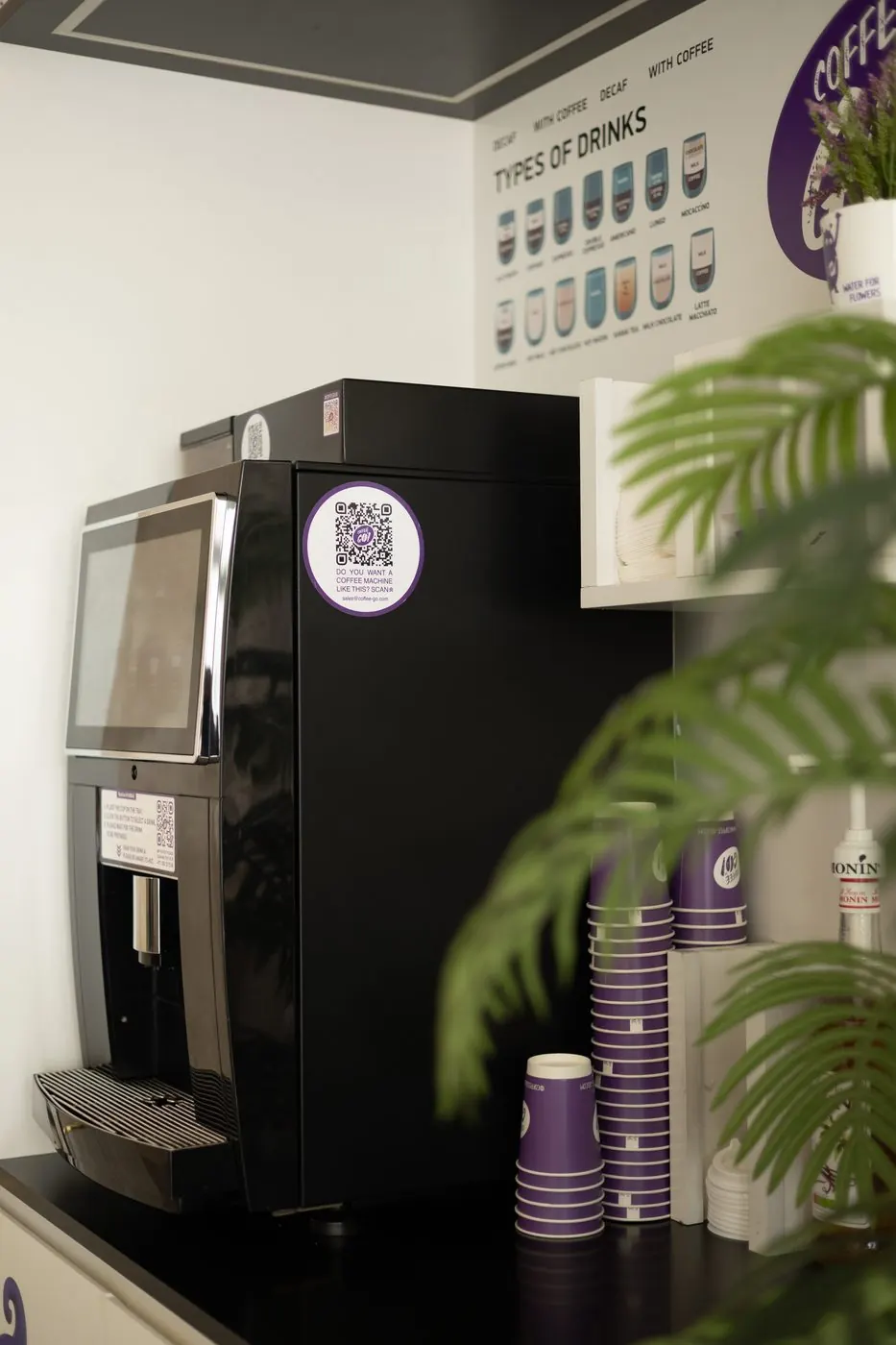
Two ways to run a coffee machine in a clinic
The first decision is not the machine. It is who pays for the drink. Everything else, from the contract to the card terminal, follows from that.
1. Free for staff and patients
The clinic treats coffee like air conditioning: part of the experience. The provider installs, refills and services the machine at no charge, and the clinic pays only for the ingredients used, from AED 1,000 a month (or a fixed monthly plan from AED 99 for a very small practice). Patients, companions and staff drink for free. This suits dental, dermatology and aesthetic clinics, physiotherapy centres and any practice where a waiting room coffee machine is part of the service the patient is paying for.
2. Patients pay by card, the clinic earns
A large polyclinic, a diagnostic centre or a hospital outpatient floor has footfall, not a guest list. Here the machine is installed at the provider's cost with a card terminal, visitors pay per cup, and the clinic receives a fixed fee of AED 150–500 a month or 10–15% of revenue. Staff coffee can still be handled separately. This is the same model we use in building lobbies.
| Free for patients | Patients pay by card | |
|---|---|---|
| Best for | Dental, aesthetic, physio, small GP practices | Polyclinics, diagnostic centres, hospital floors |
| Machine and service | Free | Free |
| The clinic pays | Ingredients, from AED 1,000 / month | Nothing |
| The clinic receives | Happier patients and staff | AED 150–500 / month or 10–15% |
| Payment on the machine | None needed | Card and phone terminal |
Some clinics combine both: a free machine in the staff room and a card-paid one in the public lobby.
Hygiene: the questions clinics actually ask
When we installed machines in a polyclinic on Al Wasl Road and a veterinary clinic in Al Barsha, the conversation was not about flavours. It was about cleanliness, and the questions were always the same:
- Are the ingredients sealed? Beans, milk powder and chocolate sit in closed hoppers inside the machine, not in open jars on a counter.
- Who cleans it, and how often? On our terms a technician visits weekly for cleaning, descaling and refills. Ask any provider for a written cleaning routine you can keep on file.
- Is there a touch-free option? On a pay-by-card machine, patients tap a card or phone, so no cash changes hands.
- Where does the water come from? The machines run on bottled water, so there is no water line to install or flush.
If your clinic has its own infection-control checklist, send it to the provider before installation and ask them to confirm each point in writing.
Noise, space and placement
A bean-to-cup machine grinds for a few seconds per drink. In a waiting room that is fine; next to a consultation room door it is not. Place the coffee machine for the clinic near reception or in a corner of the waiting area, away from treatment rooms. The clinic provides only:
- 1–2 m² of floor in the waiting area, staff room or corridor;
- a standard socket;
- no plumbing, since the machine uses bottled water.
From site check to first cup takes 3–5 days, which usually means no disruption to appointments.
What to serve in a waiting room
Clinic menus lean softer than office menus. Patients often avoid strong coffee before a procedure, and companions with children want something sweet. Our Jetinno JL24 and Necta Krea Touch machines make 14 drinks each, from espresso and cappuccino to karak, tea and hot chocolate, using coffee from our own roastery in Dubai. Keep at least one caffeine-free option, such as hot chocolate, visible on the screen. If your clinic has a café counter and its own barista, a Rocket Espresso machine is available on the same free terms, with coffee from AED 1,500 a month.
Is it worth it for a small practice?
For a two-chair practice with five staff, a capsule machine may be enough. Once you have a full-time front desk, regular patient waits and staff on shifts, free placement is usually simpler: no machine to buy, no descaling, and someone else fixes it if it stops. Healthcare is one of nine sectors we cover; the industries page shows the others, and the areas page lists where we install across Dubai, Abu Dhabi and Sharjah. Full staff-coffee terms are on our office coffee machine page, and the paid model for public spaces is on the page for landlords.
Tell us your staff count, patient flow and location, and we'll suggest the right model within one business day.
Get a quoteFigures reflect CoffeeGo's terms in 2026. Your exact budget depends on headcount, patient flow and drink mix. This article is not medical or regulatory advice; check your clinic's own infection-control requirements. For a quote, contact CoffeeGo.